August 23, 2025Turkmenistan
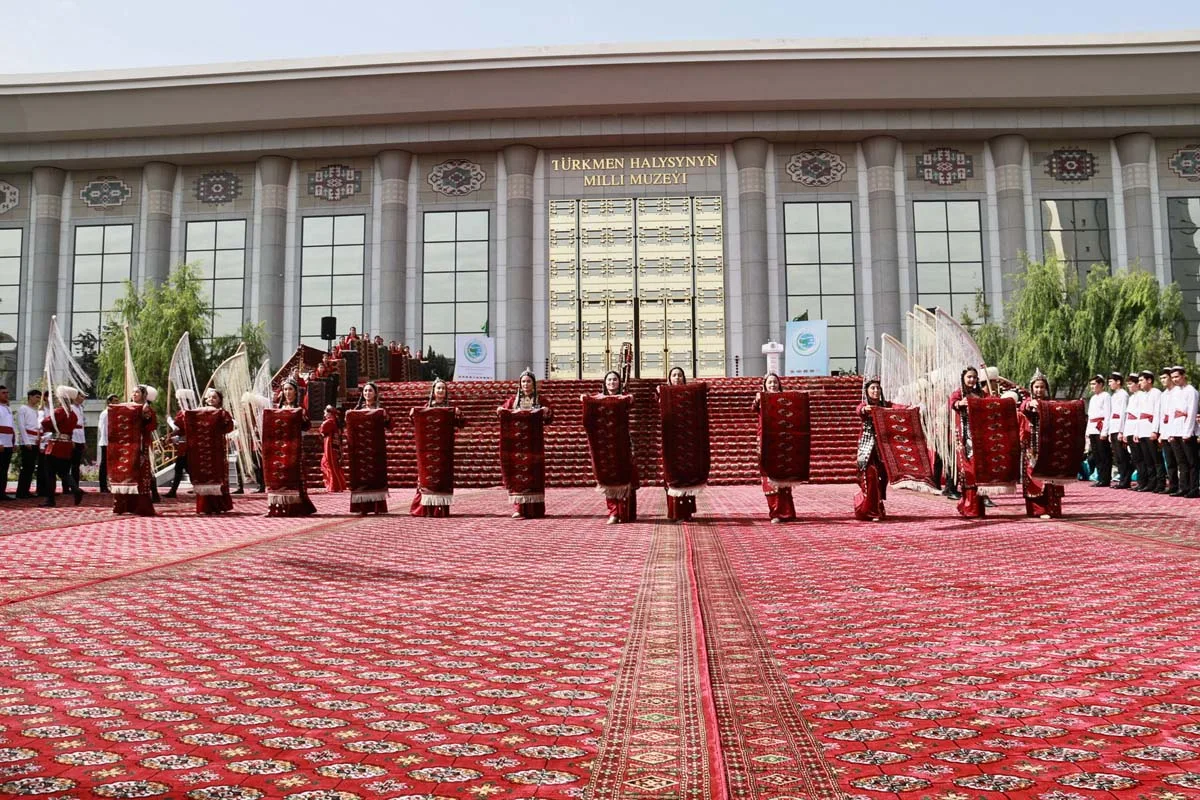
Turkmen carpet weaving has its roots in ancient times. According to scholars, the first carpets were woven over 2,500 years ago. Over the centuries, carpets reached the level of true art, with patterns that vary widely. They bear names such as “Tekke göl,” “Gabsa göl,” “Dyrnak göl,” “Saryk göl,” among others.
The National Museum of Turkmen Carpets is one of the rare institutions worldwide where this remarkable art, steeped in centuries of tradition, is studied scientifically. The museum preserves carpet works from different periods, including large-scale pieces. Notable examples include “Heart of Turkmenistan” (1941), “Galkynysh” (2001), “Golden Age” (2009), as well as “President,” “Golden Star,” and others. These wool carpets, which maintain their beauty over centuries, impress with harmonious colors, sheen, elegant patterns, density, and subtle details.
In the Ahal region’s “Gökdepe” museum, rare small carpets such as “Ensi” and “Aýna göl” are preserved, considered unique in Turkmen carpet art.
Several masterpieces of Turkmen carpets are also kept in renowned museums abroad. The Pazyryk Carpet can be seen at the Hermitage Museum in Saint Petersburg, and Turkmen carpets are displayed at the Metropolitan Museum of Art in New York. The beauty of Turkmen carpets is also depicted in works by foreign artists.
On December 12, 2019, in Bogotá, Colombia, at the 14th session of the UNESCO Intergovernmental Committee for the Safeguarding of the Intangible Cultural Heritage, the committee unanimously approved the inscription of Turkmen carpet weaving on the Representative List of the Intangible Cultural Heritage of Humanity. This demonstrates that Turkmen carpet art is recognized and celebrated worldwide.
The outstanding books of the Hero Arkadag, “Living Tales” and “The Beauty of the Sky”, serve as a valuable source for studying Turkmen carpet weaving, which has been refined over centuries. Today, the attention given to Turkmen carpets is a clear testament to the revival and international recognition of this ancient craft.
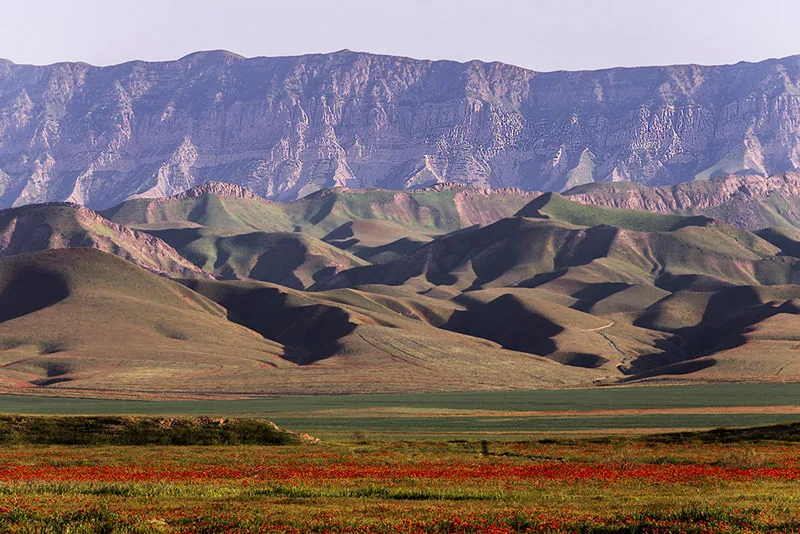
Kopetdag is a mountain range stretching along the southern border of Turkmenistan, between Ashgabat and Iran. These mountains are not only a natural boundary but also play a crucial role in shaping the region’s climate and water resources. The height of Kopetdag reaches approximately 2,940 meters at the peak of Mount Kunya-Uran, offering picturesque views of the plains, valleys, and the city of Ashgabat. Kopetdag is rich in diverse flora and fauna, including species unique to this region. The mountain slopes are covered with forests, shrubs, and steppe vegetation, and numerous springs and streams feed rivers and replenish underground water sources. The mountains are also significant for tourism. Hiking and mountaineering enthusiasts can find a range of routes here, from easy valley walks to challenging climbs up steep slopes. In winter, some areas of Kopetdag receive snow, creating a striking contrast with the hot desert lowlands. Kopetdag also preserves traces of history and culture. Archaeological sites, ancient settlements, and fortresses in the region tell the story of human life here over millennia. Kopetdag is not only a natural wonder but also a place where history, culture, and nature intersect, creating a unique landscape that attracts tourists, researchers, and lovers of active recreation.
Learn more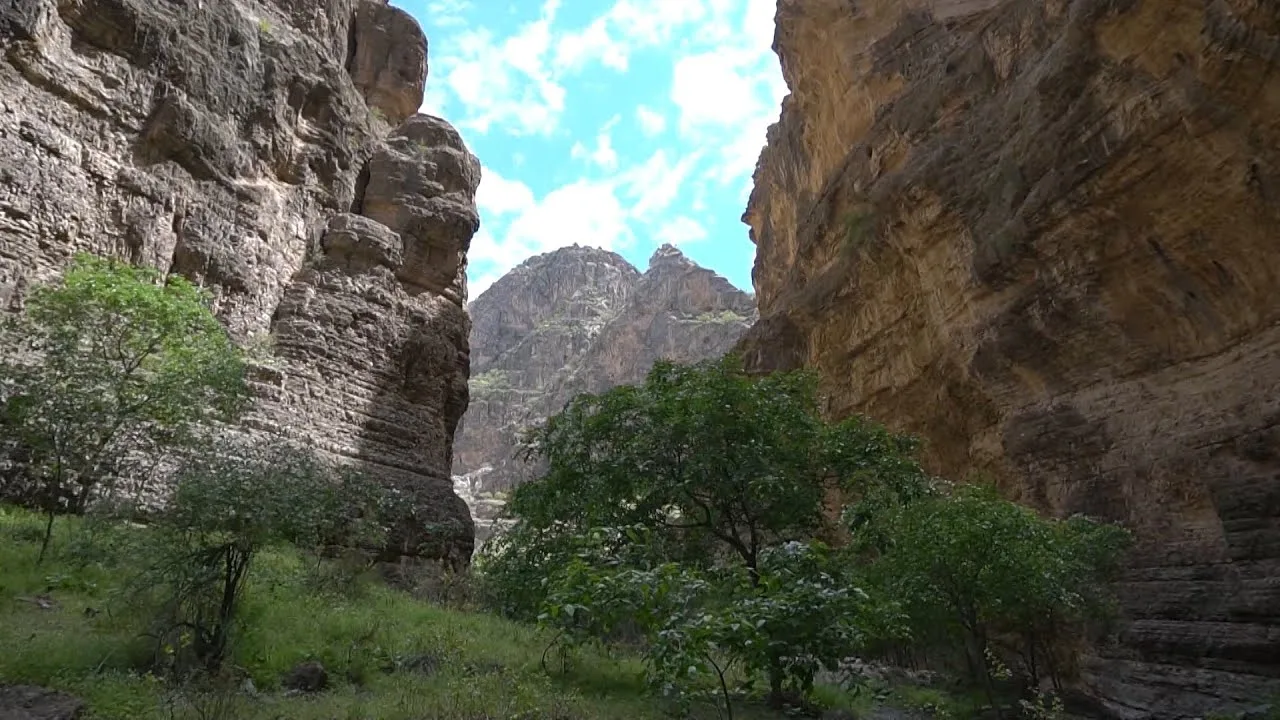
Running along the eastern edge of Turkmenistan is the south-western ridge of the Gissar Range of the Pamir-Alay mountain system, named Kugitang since the dawn of time. Another name, Koytendag, means “impassable mountains”. The western slopes of the Range are truly impassable. They are jagged with numerous gorges reminiscent of canyons with several-hundred-meter-high precipices. The region is one of the richest in Turkmenistan in natural and mineral resources. It boasts large deposits of rock and potassium salt, native sulfur, gypsum, celestine, polymetals, barites, marble onyx, cladding stones, and other building materials. Turkmenistan’s highest peak, Ayrybaba, is in the Koytendag. It is the area of strikingly beautiful natural scenery, especially in the winter, when the summit and access routes are covered in snow, which can be several meters deep in some places. The Zeravshan juniper is the only plant to survive in this snow-clad terrain. Yet, even this mighty and usually tall, branchy tree takes an unusual trailing form, withstanding strong winds. In spring, the flower-strewn area is ablaze with color. In February, bright crocuses bloom in thawed patches almost at the summit. Markhors, argalis, and lynx – animals listed in the Red Data Book of Turkmenistan – are found in juniper forests on the mountain slopes. The Koytendag is home to a wealth of wildlife with a total of 1,170 species, of which about 1,000 are plant species. The Koytendag State Nature Reserve helps to protect natural landmarks: the Umbardere Gorge, Kyrkgyz Gorge, Daraydere Canyon, the Unabi tree (jujube) grove, thermal springs near the foothills of Gaynarbaba, the centuries-old plane trees in the village of Koyten, the age-old mulberry tree in the Khojagaravul Gorge, the Karlyuk Karst Caves, and the Dinosaur Plateau.
Learn more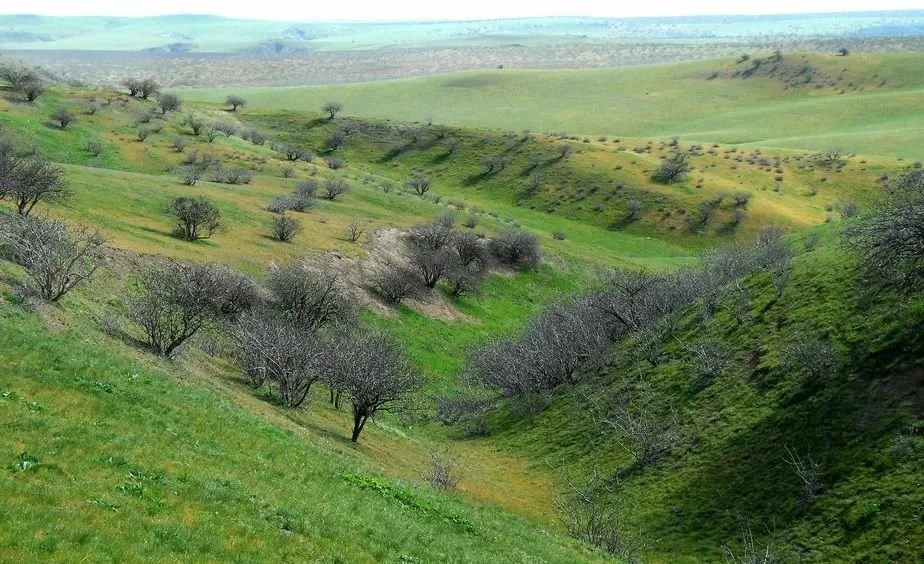
Badhyz Nature Reserve (Turkm. Bathyz goraghanasy ) is located in Mary province in southern Turkmenistan. Covering an area of 877 square kilometers, it was established in 1941 to protect the ecosystems of the Badhyz plateau between the Kuschka and Tejen rivers. The reserve is a semi-desert region with hills and plains, distinguished by unique flora and fauna characteristic of this part of Central Asia. The administration of the reserve also manages three sanctuaries: Kyzyljar, Pulihatum, and Chemenabit, all established in 1956. Badhyz Reserve has attracted the attention of scientists since its inception. Botanists, zoologists, and geographers have studied the nature here, while efforts have been made to protect kulan and goitered gazelles. The terrain of the reserve is varied: hills range from 20 to 200 meters in height, gradually rising in the southwest to 800 meters, forming a mountainous landscape. One of the most remarkable areas is the Erolanduz basin, a 20-kilometer-long depression with a saline lake up to 500 meters deep. The edges of the basin are surrounded by black volcanic and rocky outcrops, and traces of ancient plants can be found on andesite-basalt layers. Water resources in Badhyz Reserve are scarce. The main sources of water for animals are the Kuschka and Tejen rivers, the freshwater springs Akarshem and Nerdevanly, and temporary pools. The reserve plays a crucial role in protecting rare species, such as kulan and goitered gazelles, and preserving the unique natural landscapes of southern Turkmenistan.
Learn more